
How to get mobile data in Japan
Japan has superb coverage and almost no useful free Wi-Fi outside airports and a few chains. Here is what works for a visitor, and why pocket Wi-Fi is still worth considering for groups.
 Daniel de NieuweOct 22, 20264 minute read
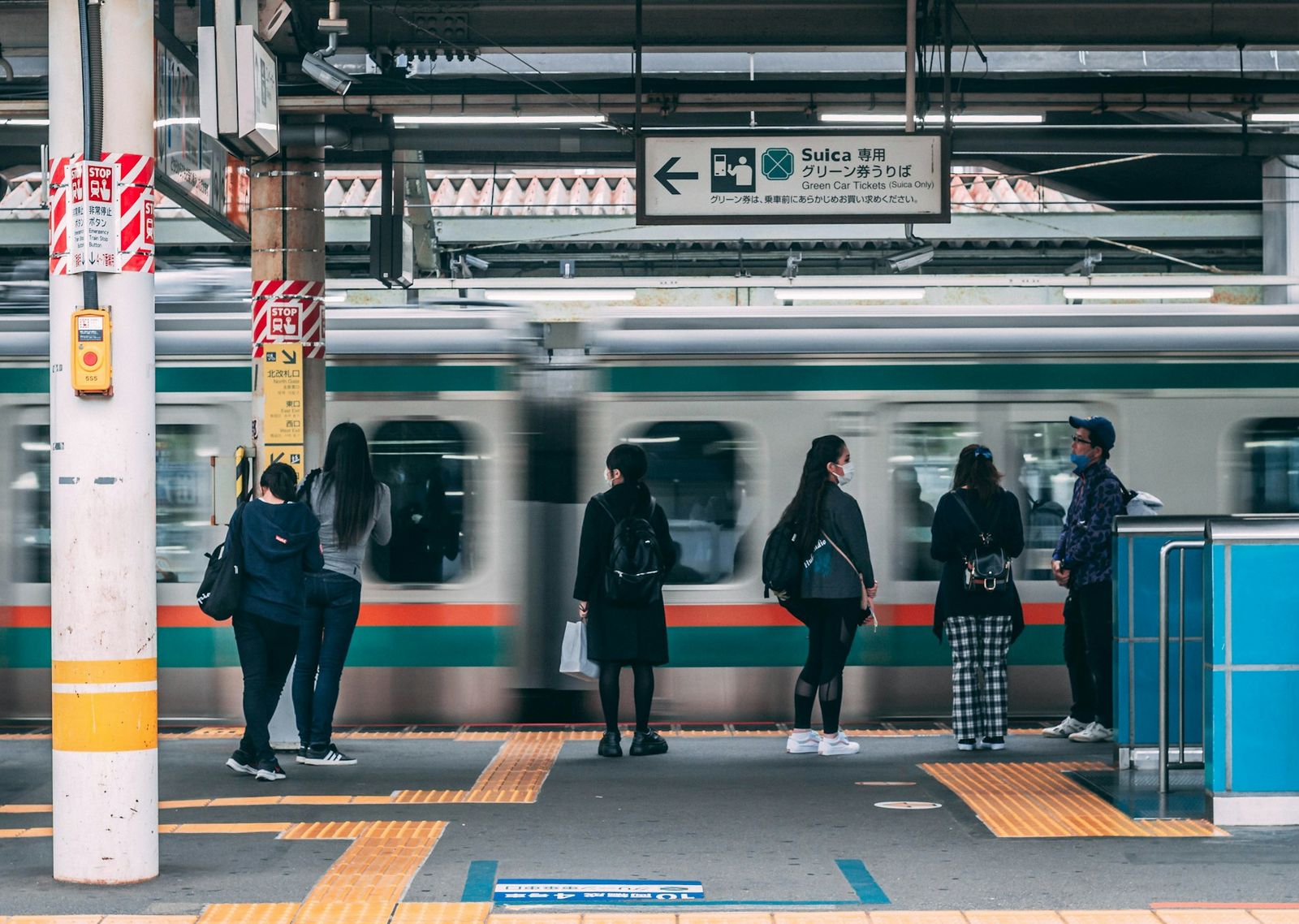
Sort it out before you fly. Japan has excellent mobile coverage and almost no useful free Wi-Fi outside airports and a handful of chains, and buying a local SIM on arrival is harder here than in most countries. A travel data plan for Japan installed at home is the path of least resistance by a wide margin.
Why Japan is different
Two things catch people out, and they pull in opposite directions.
The network is superb. Coverage is near-total, including the Shinkansen, rural prefectures and most of the mountains. You will not be hunting for signal.
Getting onto it as a visitor is awkward. Japanese operators sell voice contracts to residents with a local address and a Japanese bank account. Tourist-facing prepaid options exist, but they are a side business rather than the main one, and the shops that sell them are not where you will be.
Japan is one of the easiest countries in the world to use a phone in, and one of the more annoying to get a phone connected in.
Free Wi-Fi, and why it will not carry your trip
It exists, and travelers consistently overestimate it.
| Where | Reality |
|---|---|
Narita, Haneda, Kansai airports | Reliable. Good enough to install a plan if you did not before you flew |
Major JR stations | JR-EAST and JR-WEST free Wi-Fi, usable, and gone the moment you leave the station |
Shinkansen | Onboard Wi-Fi exists. Slow, and unreliable at speed |
Starbucks, McDonald's | Works, often needs a sign-in |
7-Eleven, FamilyMart, some Lawson | Works, but registration often runs through a Japanese-language portal with email verification. Budget ten minutes |
Everywhere else | Nothing |
Several of these disconnect you after ten or thirty minutes and some carry data caps. The pattern is hotspot-only: you are connected while standing still in specific places, and offline while moving between them.
That is exactly backwards from what a traveler in Japan needs, because Japan is a country you navigate. Train transfers, platform numbers, which of the fourteen exits at Shinjuku, a restaurant that takes cash only and is down an unmarked staircase. All of that happens while moving.
The four options, ranked
| What it is | Verdict | |
|---|---|---|
| Travel eSIM | Installed at home, starts when you arrive | Best for almost everyone. No counter, no deposit, no returning anything |
| Pocket Wi-Fi rental | A portable router, collected and returned at the airport | Works, and makes sense for a group sharing one device or a family with several phones. You are carrying and charging a second device, and you must return it |
| Local prepaid SIM | Bought at an airport counter or electronics store | Possible, more fuss than it is worth for a short trip, and you lose your own number unless your phone runs two lines |
| Roaming on your home plan | Nothing to do | Fine for a day or two on an EU plan. Expensive from the US, UK or anywhere else |
If Japan is one stop on a wider trip, an Asia regional plan covers the crossings into Korea, Taiwan or Thailand on one plan.
Pocket Wi-Fi deserves a fair hearing, because it was the standard answer in Japan for years and the rental industry is still large. For four people sharing, it can be cheaper than four plans, and it gives you a single bill. Against that: you collect it, you charge it nightly, everyone has to stay near whoever carries it, and you must return it before you fly home, which means getting to the right counter at the right terminal with time to spare.
For one or two people, it is a lot of ceremony for a connection you could have had before leaving the house.
What you actually need, in data terms
Japan is navigation-heavy and video-light for most travelers, which keeps usage low.
| Activity | Reality in Japan |
|---|---|
Maps and transit routing | Constant, and cheap. Google Maps transit directions here are excellent and worth the data |
Translation apps | Frequent, especially menus. Camera translation uses more than text |
Ride-hailing | Less essential than elsewhere. Trains go everywhere |
Restaurant lookups and reservations | Frequent. Many places are hidden, and the listing is often the only way to find the door |
A week of this is comfortably inside a mid-sized plan. If you are not streaming on the train, you are a light user here regardless of your habits at home.
Practical details worth knowing
Trains are where you will use the phone most. Transit routing, platform numbers, and the last-train calculation that decides your evening. Download an offline map of the cities you are in as a backup.
Cash still matters, which is a data issue. Finding an ATM that takes foreign cards means a map lookup. Convenience store ATMs are the reliable answer and you will be searching for them.
Your phone must be carrier-unlocked. This is true everywhere, and worth repeating for Japan specifically, because Japanese-market phones are often locked and travelers buying a used Japanese phone before a trip get caught by it. The Knowledge Base has the carrier lock check and what to do about it.
Coverage is good enough that signal is never the problem. If data is not working in Japan, it is a settings issue or a plan issue, not the country.
What to do
- Buy a plan for Japan before you go, sized to a week of maps, messaging and lookups rather than streaming.
- Install it at home over Wi-Fi. It waits until you arrive and starts by itself. When your plan starts depends on the plan, so check before you buy.
- Download an offline map of Tokyo, Kyoto, or wherever you are based.
- Leave your home SIM in the phone for calls and bank codes, with its data switched off.
- Turn off airplane mode when you land and give it two minutes to register.
Key facts
- Coverage in Japan is excellent, including rural areas and the Shinkansen.
- Free Wi-Fi is hotspot-only: airports, major JR stations, and some chains. It disconnects when you move.
- Convenience store Wi-Fi often needs registration through a Japanese-language portal.
- Pocket Wi-Fi makes sense for groups and families. For one or two people it is more effort than a plan.
- Local SIMs are sold to tourists but are a side business, not the main one.
- Japan is navigation-heavy and video-light, so most travelers use less data than they expect.
Sources
- Japan National Tourism Organization - free Wi-Fi and connectivity for visitors
- JR-EAST FREE Wi-Fi service information
Airport, station and convenience store Wi-Fi arrangements change. Treat the table above as the pattern rather than a guarantee for a specific terminal or branch.